# Lal Mahal
> Lal Mahal in Pune, visited 19 Nov 2026: a 1988 rebuild of Chhatrapati Shivaji Maharaj's childhood home, opposite Shaniwar Wada. What's inside, the Shaista Khan story and how long you need.
- Location: Pune division, Maharashtra, India
- Difficulty: easy (scale: easy, moderate, challenging, technical)
- timings: Being checked (open at 10:45 AM on a weekday when we visited)
- Starts at: Lal Mahal gate, Kasba Peth, Pune, opposite Shaniwar Wada
- Fees: Being checked
- Time: 30 to 45 minutes
- By public transport: Pune Metro to Kasba Peth (Purple Line), then a short walk
- Best time: Year-round, weekday mornings
- Last updated: 2026-11-24
- Source: https://trekmaharashtra.com/lal-mahal/
Lal Mahal is a rebuilt version of the house where Chhatrapati Shivaji Maharaj grew up, on the spot where he later raided the Mughal general Shaista Khan. Go because it's right opposite Shaniwar Wada and takes half an hour. Don't go expecting a 17th-century building: the original is long gone, and what stands today was built by the city in the 1980s.
Think of it as a memorial, not a monument. Taken that way, it's a calm, well-kept stop.
## What it's really like
Vivek from our team went on a Thursday morning, 19 Nov 2026, at about 10:45. There were very few people about, and he had the main hall almost to himself.
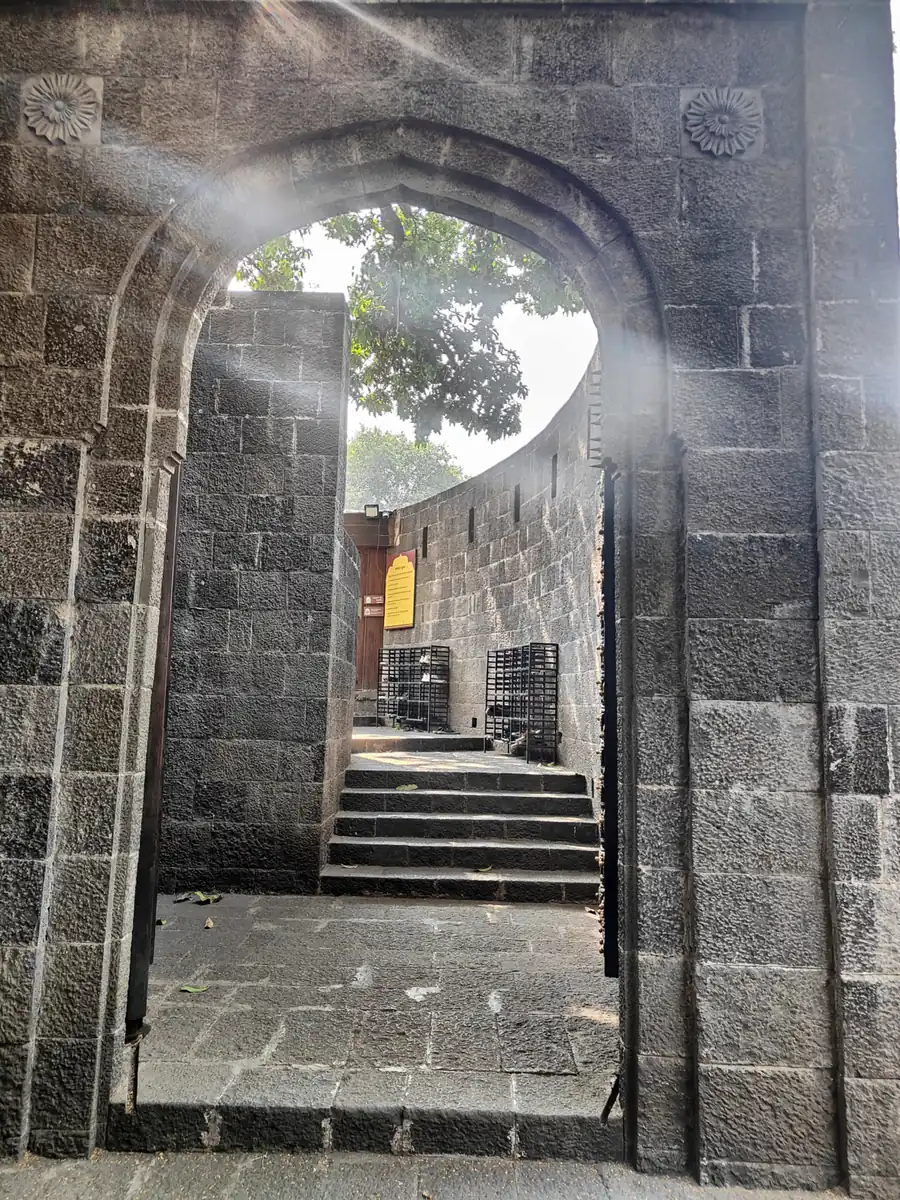
**You walk in through a stone arch.** It's a heavy grey stone gateway with steps beyond it, and the shoe racks are right there. Shoes come off before you go further. A yellow board of visitor rules hangs near the racks.
The entrance arch. Leave your shoes in the racks past the steps.
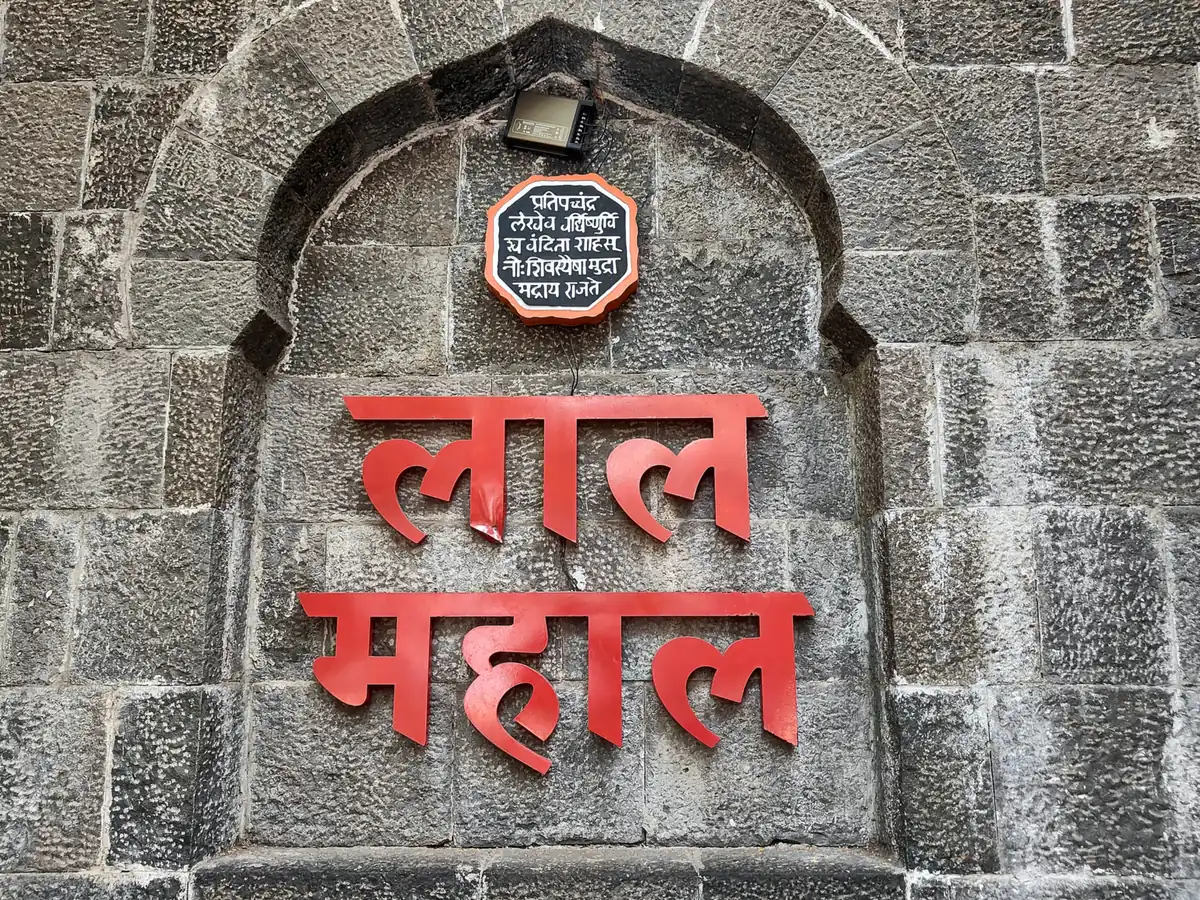
**The name wall is where everyone takes their photo.** Big red letters spell out "लाल महाल" on grey stone, with the Shivmudra, Chhatrapati Shivaji Maharaj's royal seal, set above them.
The name wall, with the Shivmudra above.
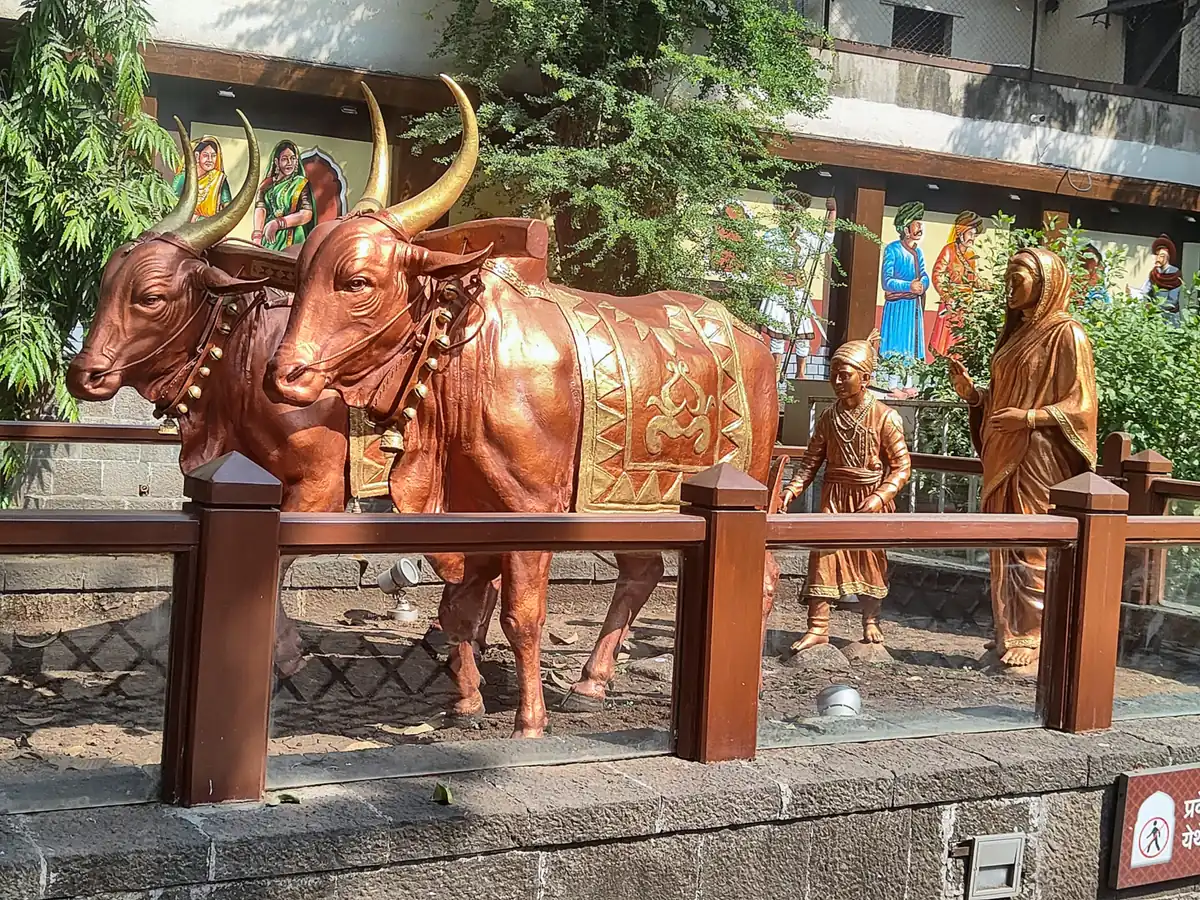
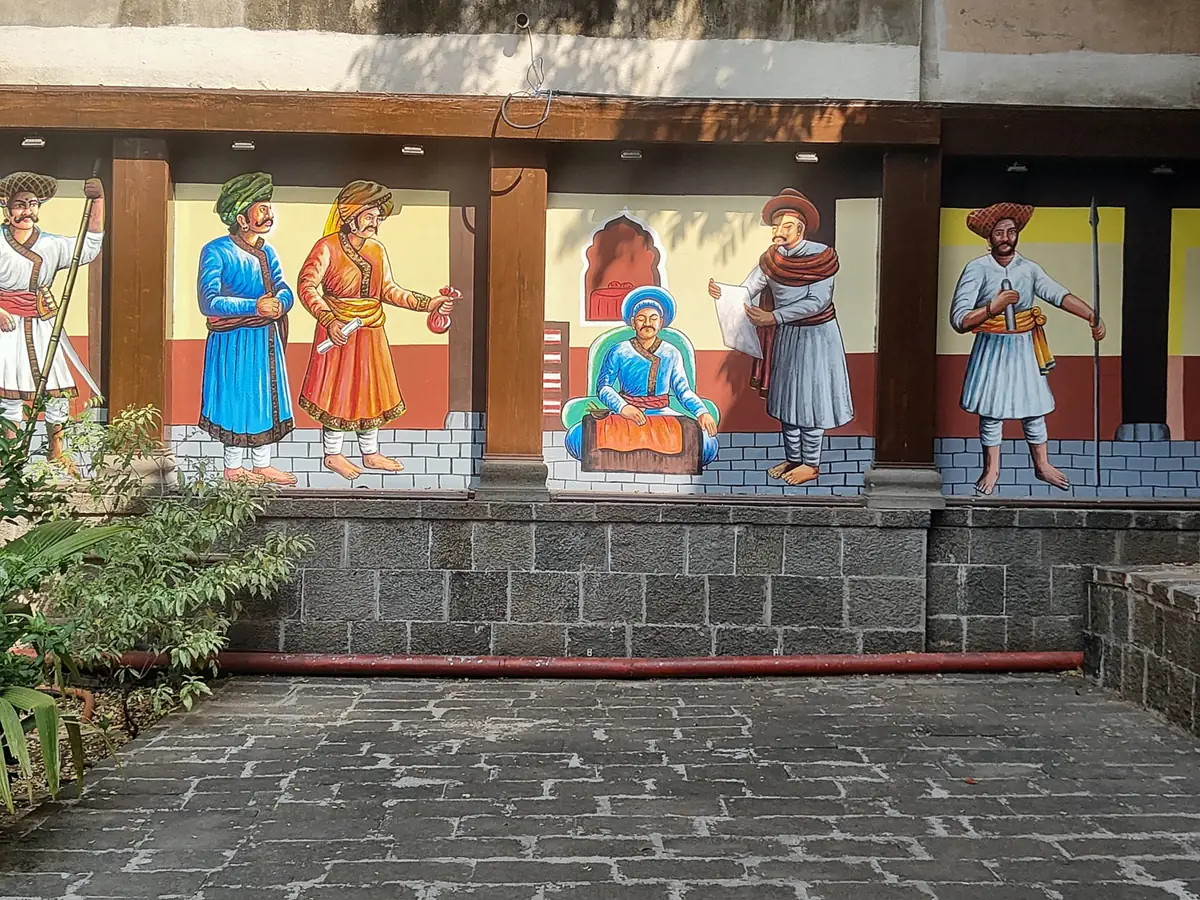
**The courtyard is the surprise.** Before the hall there's a sculpture of a golden plough: two bullocks, a boy and his mother. It shows an old Pune story: when Rajmata Jijabai and the young Chhatrapati Shivaji Maharaj arrived, Pune had been laid waste, and she had its land ploughed with a golden plough to tell people it was safe to come back. Behind it, the walls are painted with scenes of court life: soldiers, courtiers and the ruler at his desk.
The golden plough sculpture: Rajmata Jijabai and the young Chhatrapati Shivaji Maharaj.
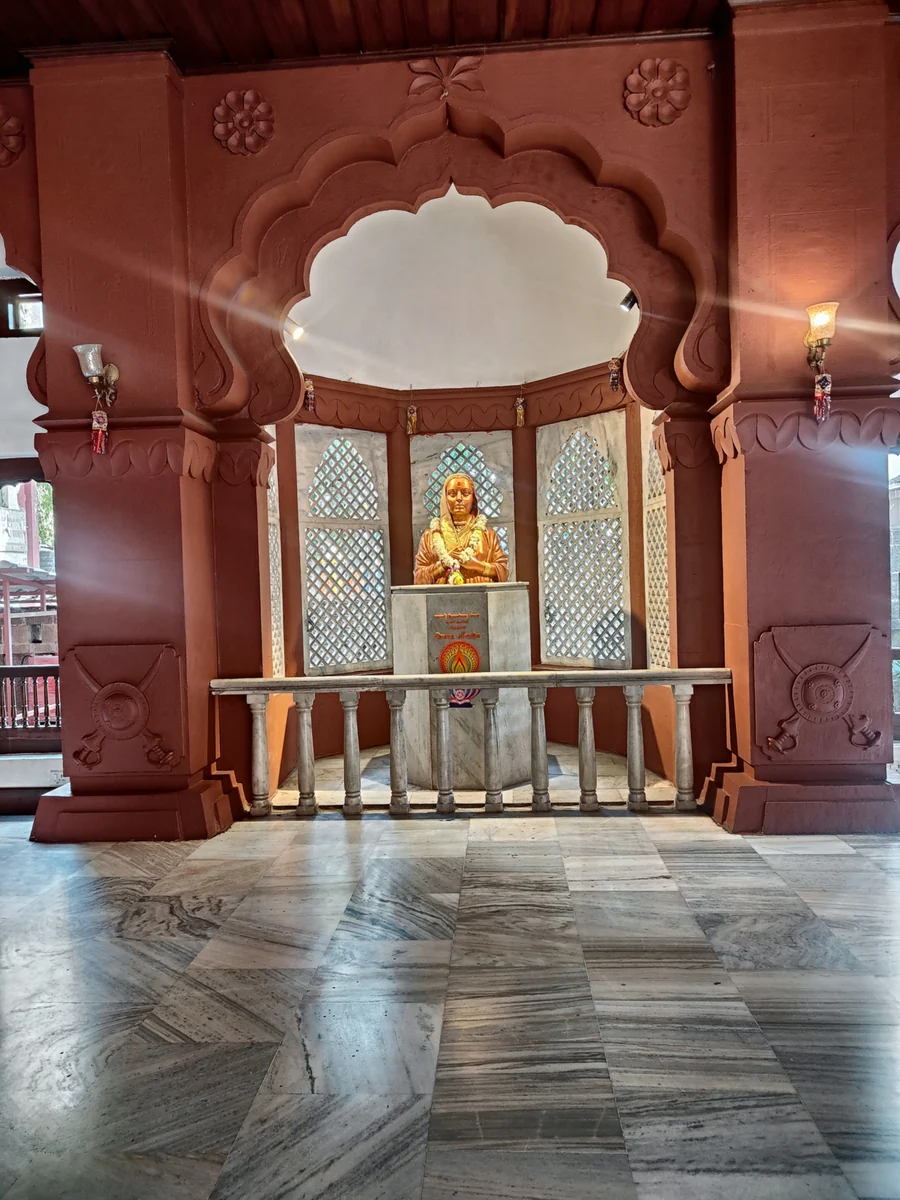
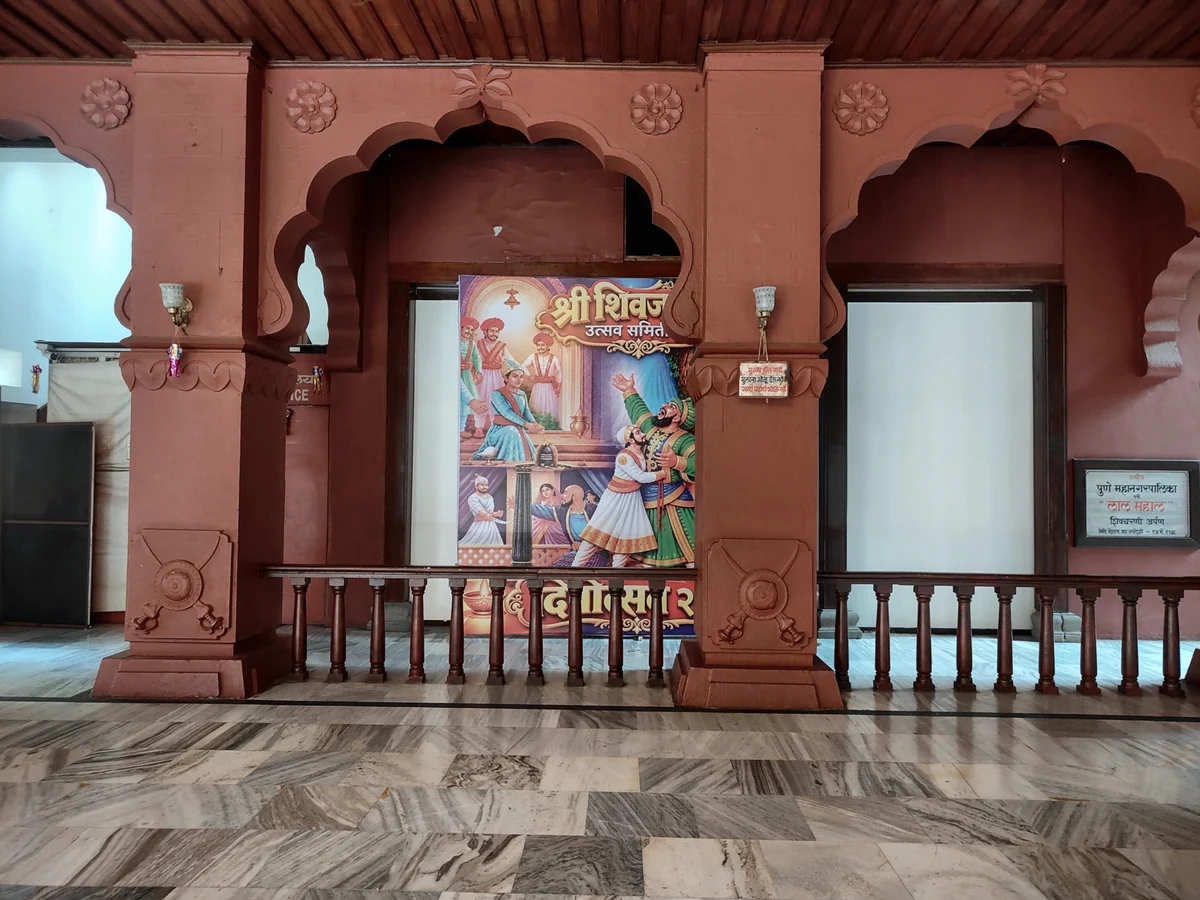
**The main hall is the heart of it.** It's a wide room of red carved arches, a polished stone floor and a brass chandelier, with large paintings of Chhatrapati Shivaji Maharaj's life on the walls. Rajmata Jijabai's gilded bust sits under the centre arch, framed by white marble jali screens. It's quiet and well kept. A board asks that children don't play and that nobody eats in the hall.
Rajmata Jijabai's bust, the focus of the main hall.
**The honest part:** it's small, and it's new. Vivek saw the main sights in about 15 minutes. There are no old walls to touch and no rooms set up as they were. If you've just come out of Shaniwar Wada, the change from real ruins to a modern memorial is obvious.
## Why it matters
Shahaji Raje Bhosale had the first Lal Mahal built around 1630 in his Pune jagir, as a home for Rajmata Jijabai and their son while Pune was being resettled. Chhatrapati Shivaji Maharaj spent his boyhood here and lived here until he took Torna, his first fort, in the mid-1640s. His marriage to Saibai in 1640 is also said to have taken place here, though some histories place it in Bengaluru.
The story everyone knows comes later. In 1663 the Mughal general Shaista Khan was camped in Pune with a huge army and had moved into Lal Mahal itself. On the night of 5 April 1663, during Ramzan, Chhatrapati Shivaji Maharaj got into the camp with a small band and attacked. Shaista Khan escaped through a window but lost his fingers. Aurangzeb, embarrassed, moved him to Bengal.
The original building later fell into ruin. Pune Municipal Corporation built the present Lal Mahal between 1984 and 1988 on part of the old site. Little is known about how the original looked, so this one isn't a copy. A board in the hall records the city's dedication, dated May 1988.
The PMC dedication board (right), dated May 1988. The Shaista Khan banner was up for the Shiv Jayanti festival.
## How to do it
1. **Get there.** Lal Mahal is in Kasba Peth, directly opposite Shaniwar Wada's main gate. Take the Pune Metro to **Kasba Peth** (Purple Line), the same station as for Shaniwar Wada, and walk. Autos drop you at the gate.
2. **Don't drive in.** There's no parking of its own. If you come by car, use the paid parking near Shaniwar Wada and walk across.
3. **Shoes off** at the racks inside the entrance arch.
4. **See the courtyard first:** the name wall, the golden plough and the murals.
5. **Then the main hall:** Rajmata Jijabai's bust and the paintings.
6. **Finish at the front** with the statues on the steps.
Allow 30 to 45 minutes.
## What to see
**Rajmata Jijabai's bust.** The centrepiece of the main hall. Chhatrapati Shivaji Maharaj's mother raised him here, and the whole memorial is built around her.
**The paintings in the hall.** Large canvases of scenes from Chhatrapati Shivaji Maharaj's life, including the night raid on Shaista Khan. Give them a few minutes; they're the closest thing here to a museum.
**The golden plough.** The courtyard sculpture of Rajmata Jijabai and the young Chhatrapati Shivaji Maharaj with two bullocks.
**The courtyard murals.** Bright painted scenes of court life along the inner wall, above the stone paving.
Murals of court life along the courtyard wall.
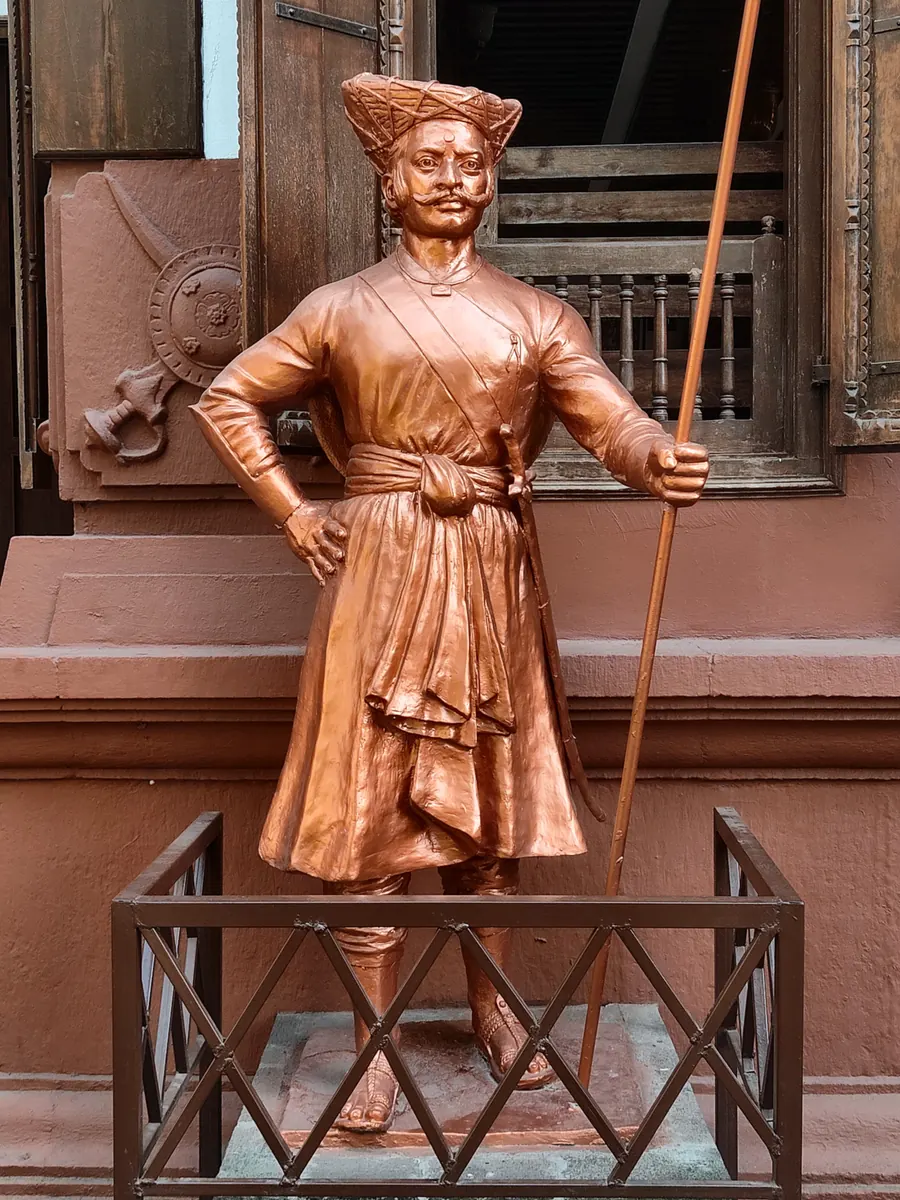
**The mawla statue.** A foot soldier with a spear, a hand on his hip and a turban, standing guard by the carved wooden windows. Mawlas were the hill soldiers of the Maval region who formed the core of Chhatrapati Shivaji Maharaj's early army.
The mawla statue, a Maval foot soldier.
## My tips
- **Do it with Shaniwar Wada.** They face each other. Shaniwar Wada first, while it's cooler, then Lal Mahal.
- **Go on a weekday morning.** Vivek found it almost empty on a Thursday at 10:45. Crowds are heaviest on Shiv Jayanti (19 February) and during Ganeshotsav.
- **Wear shoes that slip off easily.** You'll take them off at the entrance.
- **Don't bring snacks into the hall.** Eating isn't allowed there. Old Pune's tea and snack stalls are all around once you're out.
- **Read the Shaista Khan story before you go.** The building is new, so the story is what makes the visit.
- **Bring the kids, briefly.** They'll like the statues. Let them run in Jijamata Udyan next door, not in the hall.
## Places nearby
- **[Shaniwar Wada](https://trekmaharashtra.com/shaniwar-wada/):** directly opposite. The Peshwas' palace, with its gates, rampart and foundations.
- **Kasba Ganpati:** Pune's guardian deity temple, a few minutes' walk.
- **Dagdusheth Halwai Ganpati:** Pune's best-known Ganpati temple, about a kilometre away.
- **Vishrambaug Wada** and the **Kelkar Museum:** more old Pune, close by.
- **[Torna Fort](https://trekmaharashtra.com/torna-fort/):** the first fort Chhatrapati Shivaji Maharaj took, the next chapter after Lal Mahal.
- **[Sinhagad Fort](https://trekmaharashtra.com/sinhagad-fort/):** the nearest proper fort climb from Pune. For more, see [forts near Pune](https://trekmaharashtra.com/forts-near-pune/).
## Questions people ask
### Is Lal Mahal the original palace?
No. The original Lal Mahal fell into ruin long ago. Pune Municipal Corporation built the present one between 1984 and 1988 on part of the old site, and it doesn't copy the original design, which is mostly unknown.
### Is there an entry fee for Lal Mahal?
We're checking. Other sites say it's free or a token ₹3 to ₹5. We'll update this once we've confirmed it at the gate.
### What are Lal Mahal's timings?
Being checked. It was open at 10:45 AM on a Thursday (19 Nov 2026). Other sites give different hours, so go in the morning to be safe.
### How long do I need at Lal Mahal?
30 to 45 minutes if you look at the paintings and the courtyard. Vivek saw the main sights in about 15 minutes.
### What happened at Lal Mahal with Shaista Khan?
On the night of 5 April 1663, Chhatrapati Shivaji Maharaj slipped into the Mughal camp in Pune with a small band and attacked Shaista Khan, who had taken over Lal Mahal. Shaista Khan escaped through a window but lost his fingers, and Aurangzeb moved him to Bengal soon after.
### Do I need to take my shoes off at Lal Mahal?
Yes. There are shoe racks by the steps inside the entrance arch, and people walk barefoot in the main hall.
### Is Lal Mahal good for kids?
For a short visit, yes. The statues and the bullock sculpture hold their attention. The hall has a rule against children playing, and Jijamata Udyan, a children's garden, is right next door if they need to run around.
### Is Lal Mahal run by ASI?
No. It belongs to Pune Municipal Corporation (PMC), so the ASI ticket for Shaniwar Wada doesn't cover it.