# Lingana Fort
> Lingana is a steep rock pinnacle between Raigad and Torna, and a technical climb. Route, skills, gear checklist, safety risks, permissions, camping.
- Location: Raigad, Konkan division, Maharashtra, India
- Difficulty: technical (scale: easy, moderate, challenging, technical)
- Before you go: Lingana is a technical climb, not a trek: exposed rock, fixed ropes, long rappels and an 800-feet valley crossing. Go only with a trained guide or certified trek leader and proper gear (harness, carabiners, descender), never solo, and never in the monsoon or wind.
- Last updated: 2026-11-24
- Source: https://trekmaharashtra.com/lingana-fort-trek/
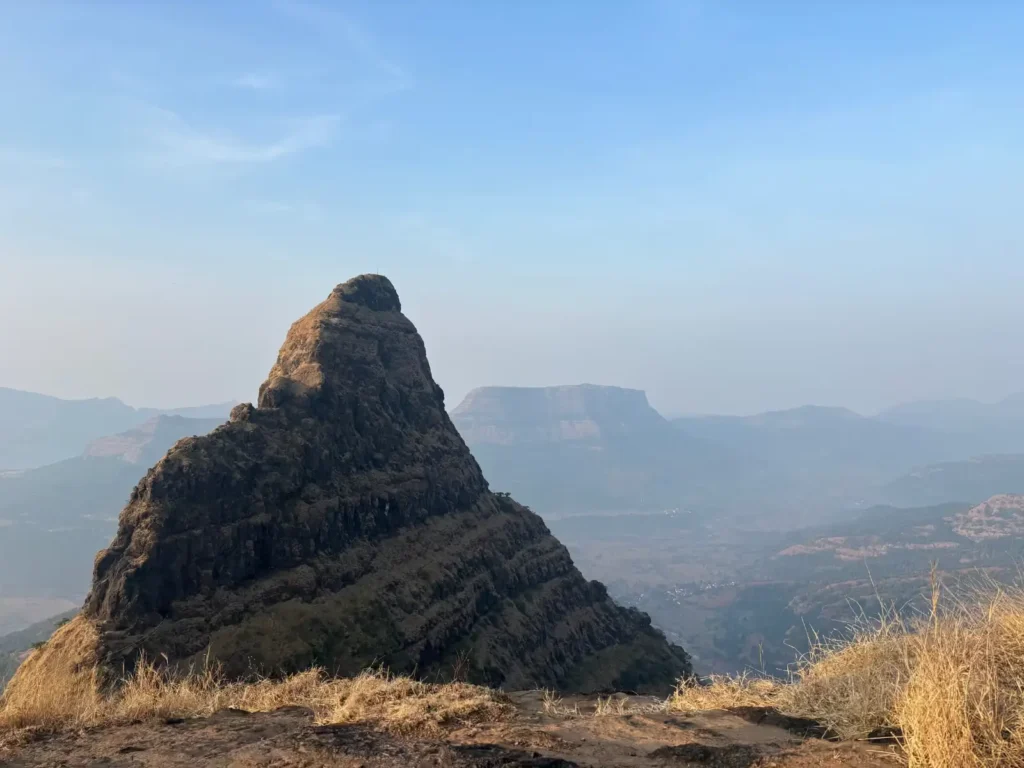
Lingana is a steep rock pinnacle between Raigad and Torna forts in Maharashtra. The route has no regular trail. Most of the climb is vertical or exposed. This makes the trek tough and risky. Only experienced trekkers with proper gear should attempt it. This guide gives clear and practical information so you can plan the trek safely.
## Lingana Fort Trek Overview
**Location:** Raigad district, Maharashtra
**Trek Type:** Technical climb with exposed rock patches
**Duration:** 6–8 hours for the full climb and descent, depending on the team
**Difficulty:** Very difficult
**Best Season:** November to February
**Ideal For:** Experienced trekkers who know basic climbing and rappelling
**Not For:** Beginners or anyone with height issues
Lingana demands focus, fitness, and proper equipment. Plan with a trained guide or a certified trek leader.
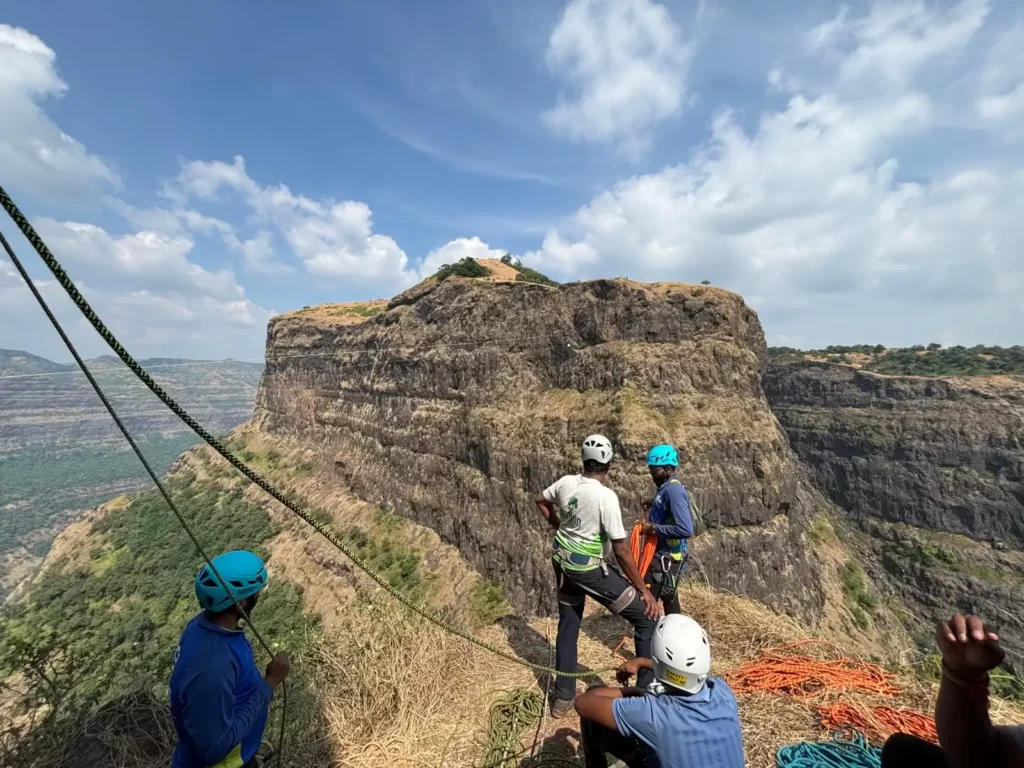
Railing Pathar Zipline Valley Crossing View from Lingana Trek Maharashtra
## How to Reach Lingana Fort
**Nearest Base Village:** Mohari or Kurne (varies by route)
**Nearest Town:** Mahad
You can reach Mahad by bus or car. From Mahad, take a local vehicle to the base village. Roads are narrow but motorable. Parking is available near the village, but space is limited.
Most teams start early from the village. The approach walk to the base of the pinnacle takes about 45–60 minutes.
## Mandatory Fitness & Skills
You must have good stamina. The climb needs strength in legs and core. You should handle long rappels and steep rock patches without hesitation.
Basic climbing skills are important. You must know how to use a harness, carabiners, and descenders. You should also know how to follow rope instructions from the guide.
Avoid this trek if you have height fear, knee issues, or low fitness. This route does not allow trial and error.
## Lingana Fort Trek Route Breakdown
Your expedition had **four clear stages**. Here is the same structure, written as a trek guide.
### **1\. Valley Crossing (Railing Plateau → Lingana Cave)**
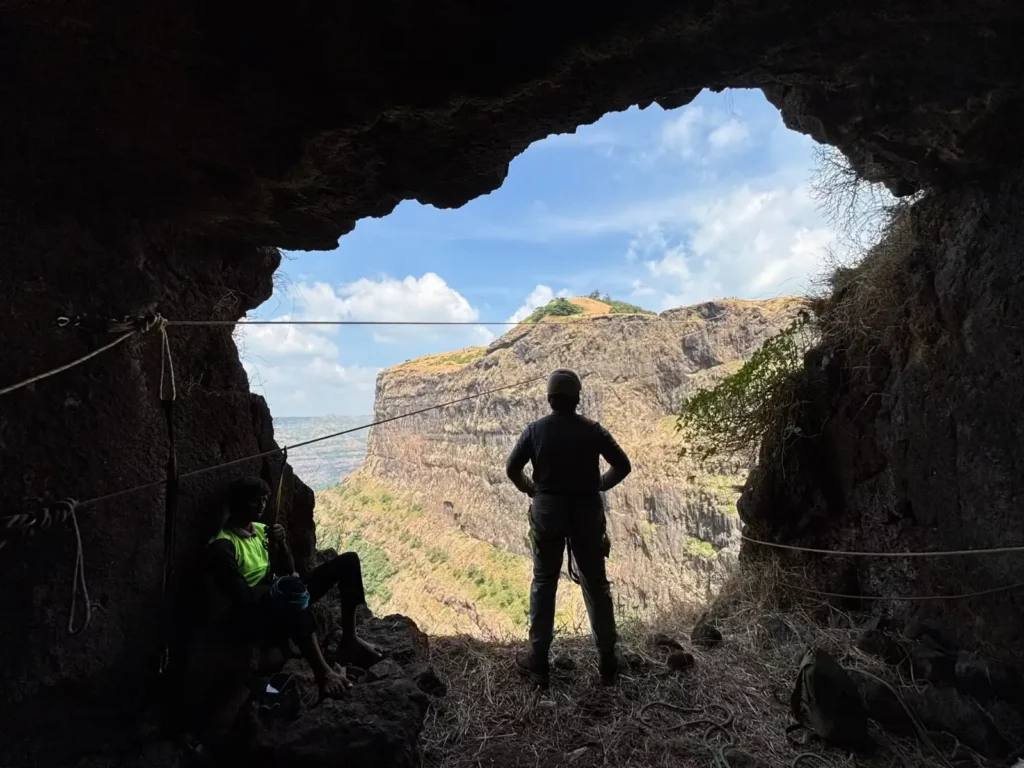
The trek starts from the Railing Plateau. From here, you do an **800-feet valley crossing** to reach Lingana Cave. The traverse is long and fully exposed. You stay on fixed ropes throughout. This section takes time because everyone crosses one by one.
### **2\. Climb from Lingana Cave to the Summit**
From the cave, the actual climb begins. This entire stretch is vertical or near-vertical. The route has small holds and narrow ledges. The guide fixes ropes at all major points. The top has a small standing area, not a wide plateau.
### **3\. Rappelling Down to the Base**
You descend through multiple long rappels. Some drops are direct, and some have slight overhangs. The base area is rocky and uneven. Stay alert while removing gear between rappel stages.
### **4\. Trek Up Through Boratyachi Nal**
From the base, you enter **Boratyachi Nal**, a steep gully. The climb is long and tiring. The route has loose soil and rocks. It opens near the plateau again.
### **Alternate Route (Common Option)**
Some groups skip the valley crossing. These teams:
1. Trek down through **Boratyachi Nal**.
2. Climb Lingana.
3. Rappel to the base.
4. Trek up again through **Boratyachi Nal**.
This option removes the long traverse but adds more ascent and descent through the gully.
## Forts and Places Visible from Lingana Peak
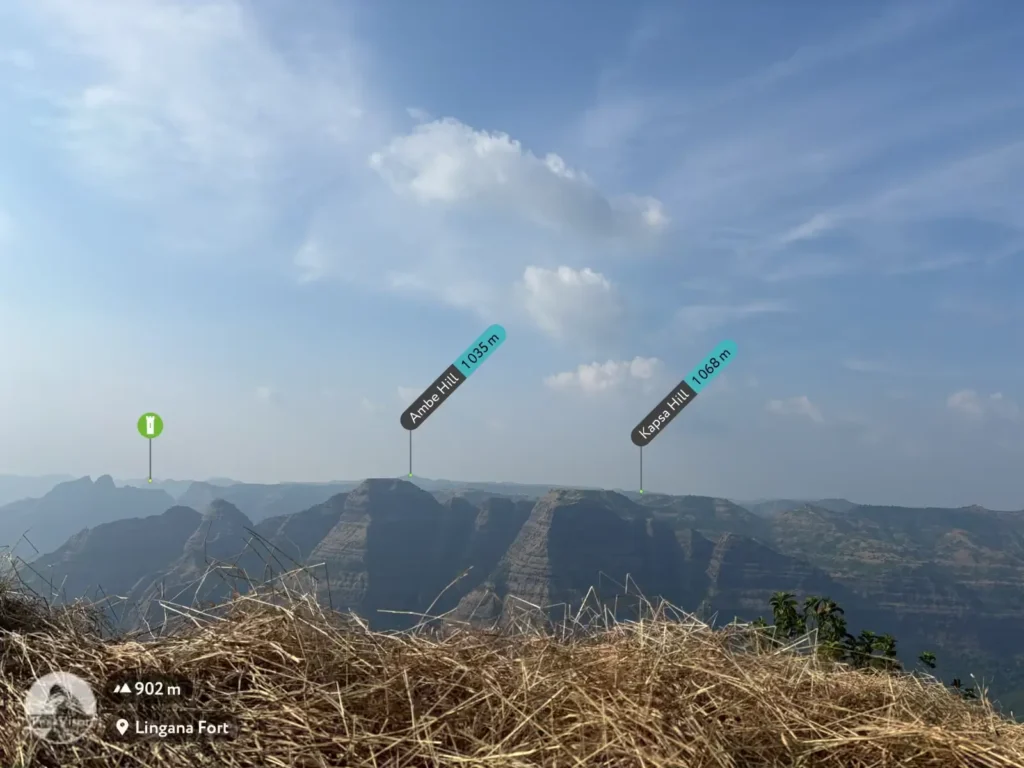
Lingana gives a wide and clear view of the surrounding Sahyadri range. From the top, you can see several major forts and landmarks.
### **Raigad Fort**
Raigad stands close to Lingana. The main walls and the upper plateau are visible.
**Read More: [Raigad Fort Travel Guide](https://trekmaharashtra.com/raigad-fort/)**
Lingana Fort View from Railing Pathar Trek Maharashtra
### **Torna Fort**
Torna lies on the opposite side. You can spot its long ridge and the high citadel area.
### **Rajgad Fort**
Rajgad appears behind the Torna region. You can identify its large bale killa structure.
### **Pratapgad Region (Distant View)**
On a clear day, parts of the Pratapgad range are visible far in the distance.
### **Surrounding Valleys**
You also get a good view of Boratyachi Nal and the deep valleys around the pinnacle.
Kokandiva Ambe Hill Kapsa Hill view from Lingana Fort
## Equipment Checklist
This trek must be done with an **experienced trek organizer**. Do not attempt it solo. It is one of the toughest treks in Maharashtra. The organizer provides all the **mandatory technical gear**. You carry only your personal items.
### **Mandatory Gear**
*(Provided by the organizer)*
- Harness
- Helmet
- Gloves
- Carabiners
- Descender
- Safety lanyard
- Ropes
- Other climbing equipment
### **Clothing**
- Quick-dry T-shirt
- Stretchable trek pants
- Light jacket or windcheater
- Cap or bandana
- Trek shoes with strong grip
### **Food & Water**
- 2–3 liters of water
- Electrolytes
- Dry fruits or snacks
- Simple packed lunch
### **Other Essentials**
- Small backpack (25–30L)
- Rain cover (seasonal)
- First-aid kit
- ORS and basic medicines
- Sunscreen
- Torch or headlamp **with extra batteries**
- Pack light
Avoid carrying unnecessary items. Extra weight makes climbing and rappelling harder.
## Safety & Risk Factors
Lingana is a high-risk trek. The rock patches are steep and exposed. One mistake can lead to a serious fall. This trek demands full focus from start to end.
Always go with a certified and experienced team. They handle ropes, anchors, and all technical setups. Follow their instructions at every stage.
Rock quality on Lingana varies. Some holds are solid. Some parts have loose soil or small stones. The gully sections in Boratyachi Nal also have loose rocks. Move slow and stay alert.
Weather plays a big role. Do not attempt this trek in rain or strong wind. Wet rock becomes unsafe. Winter is the safest season.
Do not push if you feel tired or unsure. Communicate with the guide. Safety comes first on this mountain.
Lingana Fort Cave Trek Maharashtra
## Permissions & Costs
There is **no formal permit system** for Lingana. But you must inform the local villagers or the base team before starting. Most trek organizers handle this part.
Costs depend on the organizer. The fee usually covers:
- Technical gear
- Safety equipment
- Guides and support staff
- Food (basic meals)
- Transport from the meeting point (in some cases)
Prices vary by group size and season. Always check what is included before booking.
**Suggested: [Lingana Fort Trek – My Deadly Experience](https://vinaykadam.com/lingana-fort-trek/)**
## Camping & Stay Options
There is **no camping space on Lingana itself**. The top is small and exposed.
Most teams camp at **Railing Pathar**. This is the main camping spot for the trek. The ground is flat enough for tents. Water is not available here, so carry what you need.
Some groups also stay in the base village before starting early in the morning. This depends on the organizer’s plan.
Choose camping based on weather and the team’s schedule.
## Tips for a Smooth Trek
- Start early. Lingana takes time.
- Keep your backpack light.
- Drink water in small sips through the day.
- Follow rope instructions exactly.
- Do not rush on exposed sections.
- Keep some snacks handy for quick energy.
- Check your torch batteries before the trek.
- Stay close to the group.
- Inform the guide if you feel tired or stressed.
- Avoid the trek in rain or high wind.
These small steps make the climb and descent safer and smoother.
## Questions people ask
### Can beginners do the Lingana trek?
No. This trek is only for experienced trekkers with basic climbing and rappelling skills.
### Is solo trekking allowed?
No. You must go with a certified and experienced trek organizer.
### Which is the best season for Lingana?
November to February. Avoid monsoon and windy days.
### Is camping possible on the top?
No. The summit is small and exposed. Camping happens at Railing Pathar.
### How long does the full trek take?
Around 6–8 hours for climbing, rappelling, and the return trek through the gully.
### Are technical gears provided?
Yes. Organizers provide ropes, harnesses, helmets, and other climbing gear.
### How much water should I carry?
Carry 2–3 liters. There is no water source on the route.
### Do I need prior rope experience?
Yes. You should know basic rappelling and how to use a harness and descender.
### Can the trek happen in a single day?
Yes. Most groups complete it in one day with camping at Railing Pathar before or after.
### What is the alternate route?
Some teams skip the valley crossing and use Boratyachi Nal for both descent and ascent.