# Shaniwar Wada
> Shaniwar Wada in Pune, visited 18 Nov 2026: ₹20 ticket (online only, UPI), 9 am to 5:30 pm daily, the five gates, Hazari Karanje and how long you need.
- Location: Pune division, Maharashtra, India
- Difficulty: easy (scale: easy, moderate, challenging, technical)
- timings: 9:00 AM to 5:30 PM, all days
- Starts at: Delhi Darwaja (main gate), Shaniwar Peth, Pune
- Fees: ₹20 Indians, ₹250 foreigners, under-15s free (online only, UPI)
- Time: 1.5 to 2 hours inside
- By public transport: Pune Metro to Kasba Peth (Purple Line), then a short walk
- Best time: October to February, mornings
- Last updated: 2026-11-20
- Source: https://trekmaharashtra.com/shaniwar-wada/
Shaniwar Wada is the shell of the Peshwas' palace in the middle of old Pune: massive gates, a long rampart you can walk on, and the stone foundations of a seven-storey palace that burned down two centuries ago. Go if you like history you can stand inside, or if you're in Pune for a day and want one place that explains the city. Skip it if you expect a palace with rooms; almost nothing above the foundations survives.
It costs ₹20, takes under two hours, and the ticket is online only. Sort that out before you reach the gate.
## What it's really like
Vivek from our team walked it on a weekday afternoon, 18 Nov 2026, from about 2 pm to 3 pm. Here's what he found.
**The ticket catches people out.** There's no counter. At the gate a board with a QR code tells you to scan it and pay by UPI. It takes a minute if your phone has signal and UPI set up. If you're a foreign visitor without an Indian UPI app, book at asi.paygov.org.in before you come.
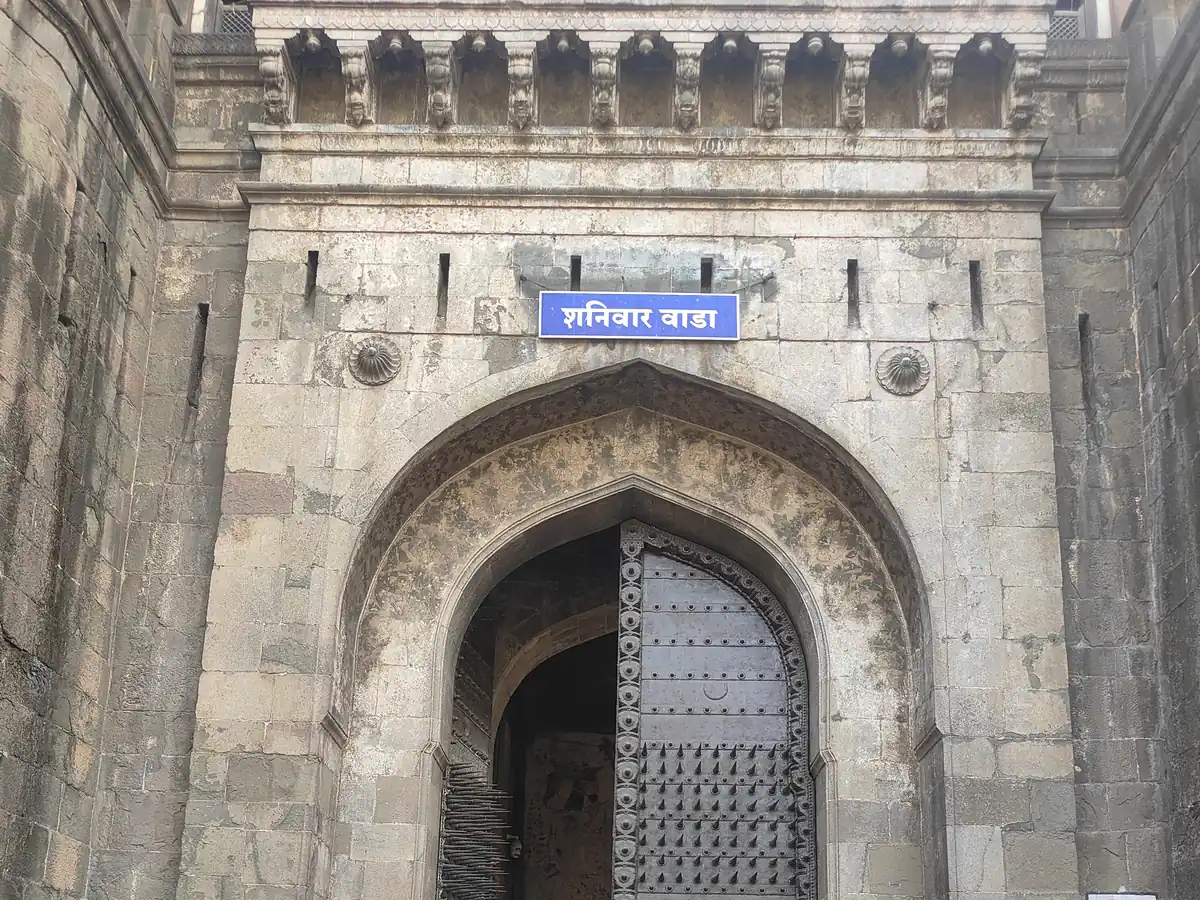
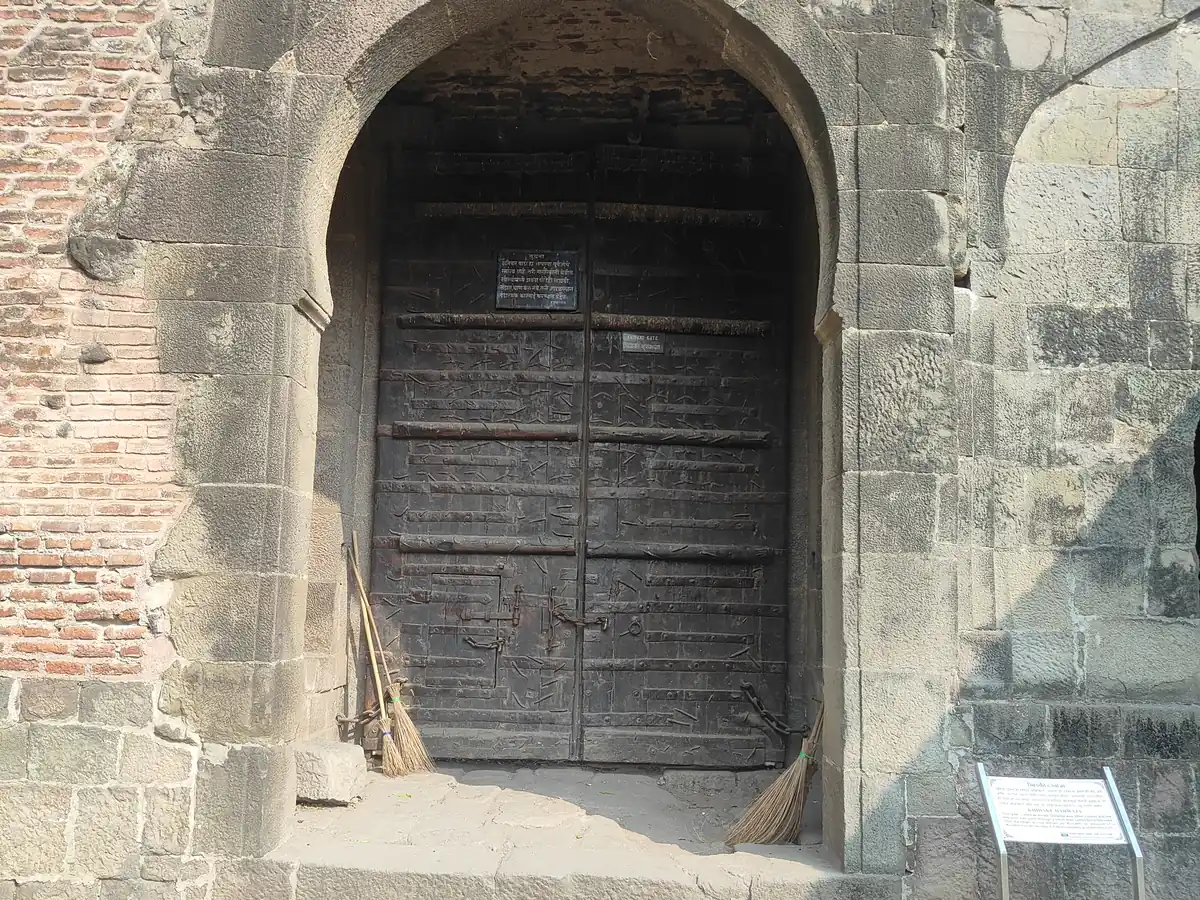
**The Delhi Darwaja is the best part, and you see it first.** The main gate faces north, towards Delhi. Look at the huge wooden doors: they're studded with iron spikes to stop war elephants ramming them. You walk in through a small wicket door cut into the big one.
Delhi Darwaja, the main gate. The spikes on the doors were meant for elephants.
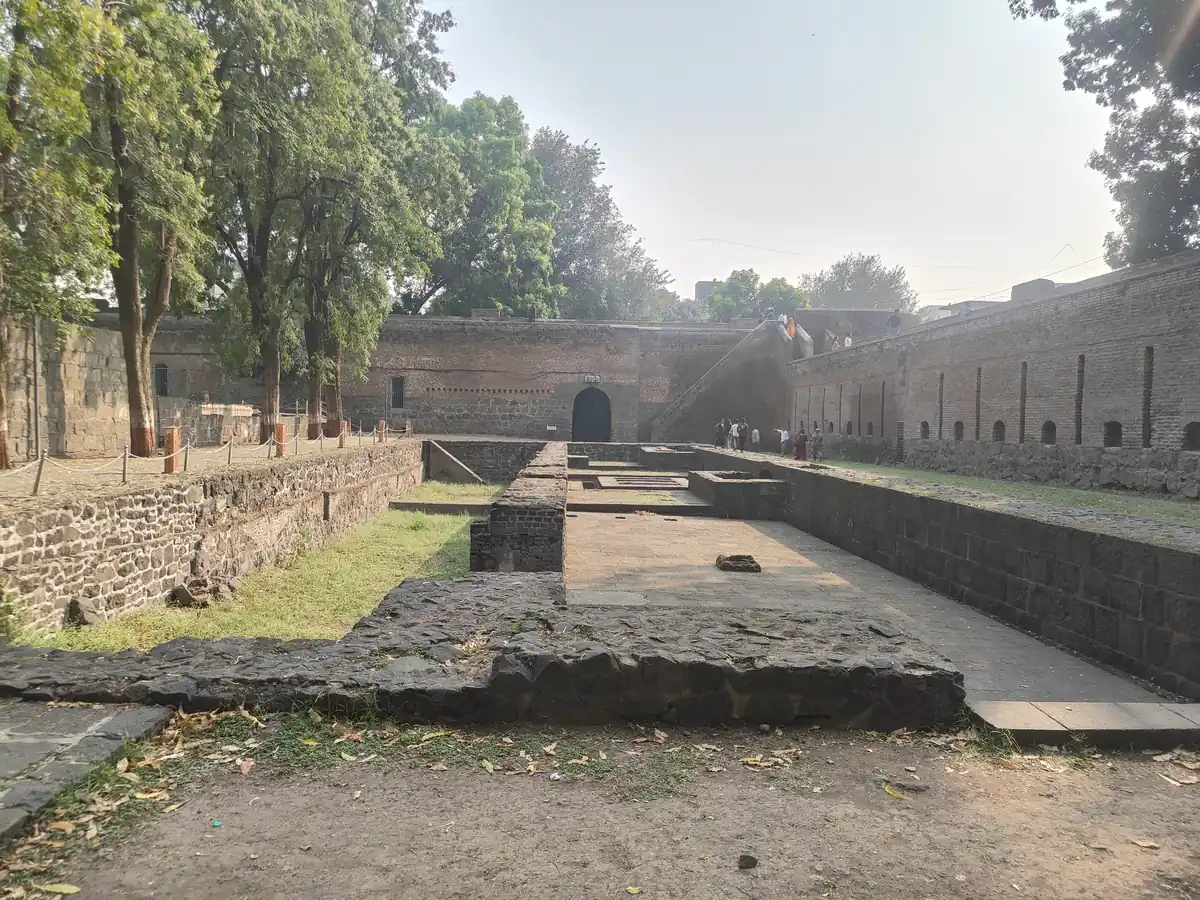
**Inside, it's a big open garden with foundations.** Don't expect rooms. What's left is a grid of low stone plinths, the outlines of halls, courtyards and fountains, set in lawns. It's easier to read than it sounds, because ASI has put up good boards in Marathi and English almost everywhere. Read the two history boards near the entrance first; they make the rest make sense.
Foundations of the palace halls, with the rampart behind. This is most of what survives.
**Walk the rampart.** There are steps up to the wall and a wide path along the top. This is where the layout clicks: from up there you see the whole footprint of the palace, the fountains and the gardens. Carry water.
## Why it matters
Peshwa Bajirao I laid the foundation on Saturday, 10 January 1730, and that Saturday (Shaniwar) gave the palace its name. The housewarming (vastushanti) was also on a Saturday, 22 January 1732. The ASI board puts the total cost at ₹16,110.
At its peak about 1,000 people lived here, and it was the seat of the Peshwas, who ran the Maratha state for the Chhatrapatis from Pune. The main building was seven storeys high. The board says you could see the spire of the Dnyaneshwar temple at Alandi from the top terrace.
Two dates hang over the place. In 1773 the young Peshwa Narayanrao was killed inside the palace, and his cry "Kaka, mala vachva!" (Uncle, save me!) is still linked to the Narayan Darwaja. In June 1818 Bajirao II surrendered to Sir John Malcolm and was sent to Bithur near Kanpur, which ended Peshwa rule.
Then the fire. It started on 27 February and burned for seven days, destroying the whole palace. The ASI board on site says 1827; most other sources give 1828. Only the rampart, the gates and the buried foundations survived. Today the site is protected by the Archaeological Survey of India (Mumbai Circle).
## How to do it
1. **Get there.** Shaniwar Wada is in Shaniwar Peth, in the old city. The easiest way is Pune Metro to **Kasba Peth** station (Purple Line), which is a short walk away. Auto-rickshaws and cabs drop you right at the Delhi Darwaja. Parking near the gate is tight, so skip the car if you can.
2. **Buy the ticket on your phone** at the gate (QR code, UPI), or book ahead at asi.paygov.org.in.
3. **Read the two history boards** just inside the gate.
4. **Do a loop:** Hazari Karanje and the fountains, the foundations, the well and the reservoir, then up onto the rampart.
5. **Find all five gates** on your loop: Delhi, Mastani, Khidki, Ganesh and Narayan.
Allow 1.5 to 2 hours. Vivek did the full loop in about an hour, reading most boards.
## What to see
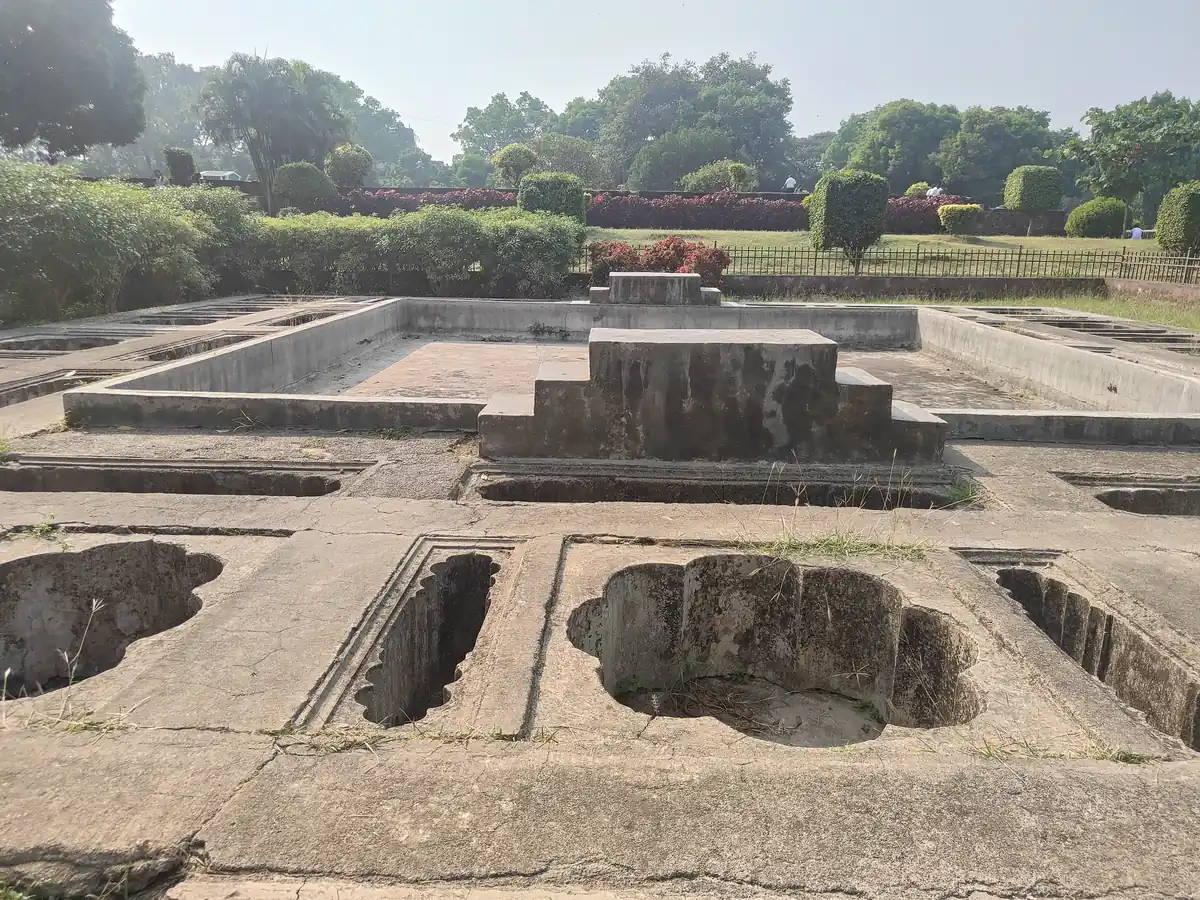
**Hazari Karanje.** A thousand-jet fountain built for Peshwa Sawai Madhavrao, shaped like a lotus with 16 petals and 16 spouts on each, 196 jets in all. The board says it could play in about 100 patterns. It's dry now, but the carved basin is still the prettiest thing in the Wada.
Lotus-shaped fountain pits set into the palace floor.
**The five gates.**
- **Delhi Darwaja:** the main gate, facing north, with the elephant spikes.
- **Mastani Darwaja:** listed as the "Natakshala gate" in old records, later named after Mastani, Bajirao I's second wife.
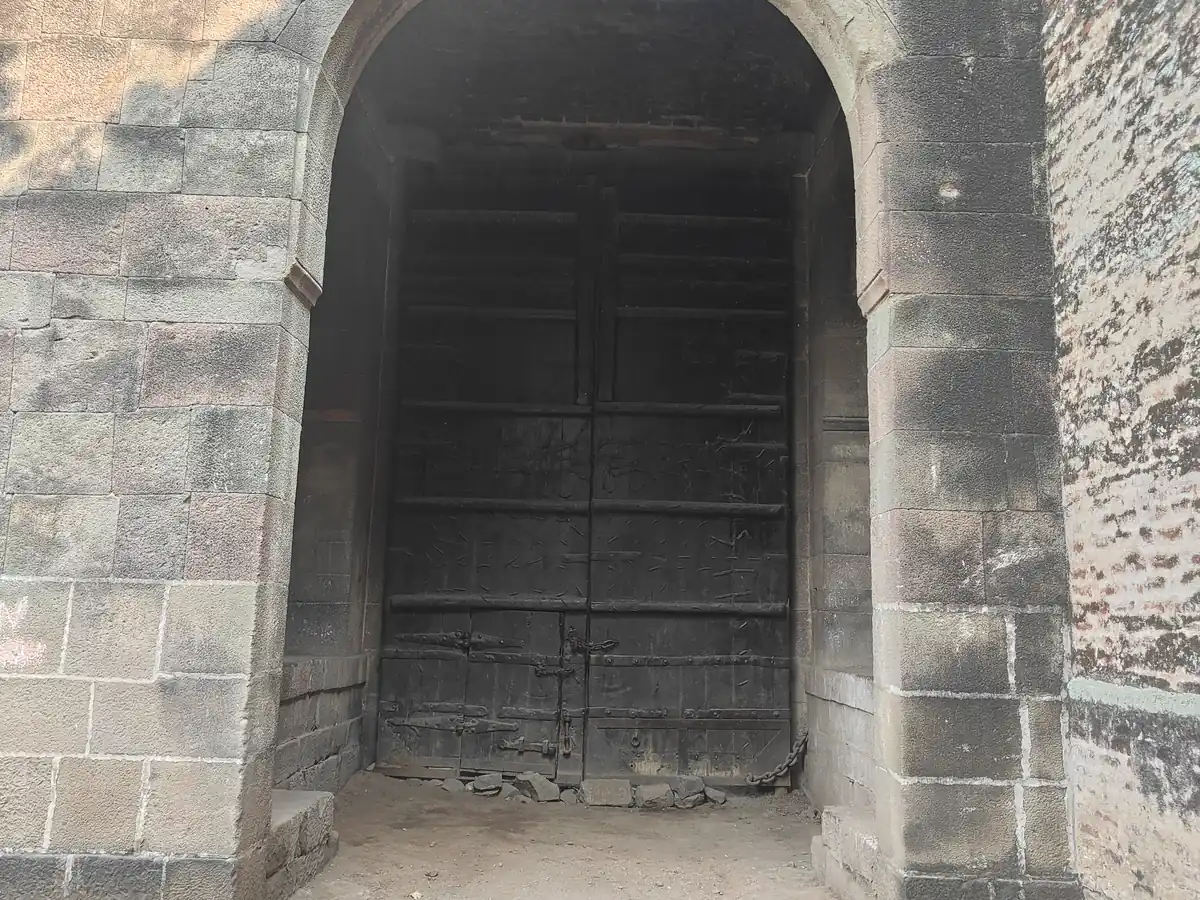
- **Khidki Darwaja:** usually kept shut; people came and went by a small door in it. Also called "Kavathi", after a wood-apple (kavath) tree that stood nearby.
- **Ganesh Darwaja:** named after the Ganapati Rang Mahal and Ganapati temple that stood near it.
- **Narayan Darwaja:** linked to Narayanrao's killing in 1773. Also called "Jambhul Darwaja", after a jambhul tree.
Ganesh Darwaja, near the north bastion.Khidki Darwaja. The big door stayed shut; people used a small one cut into it.
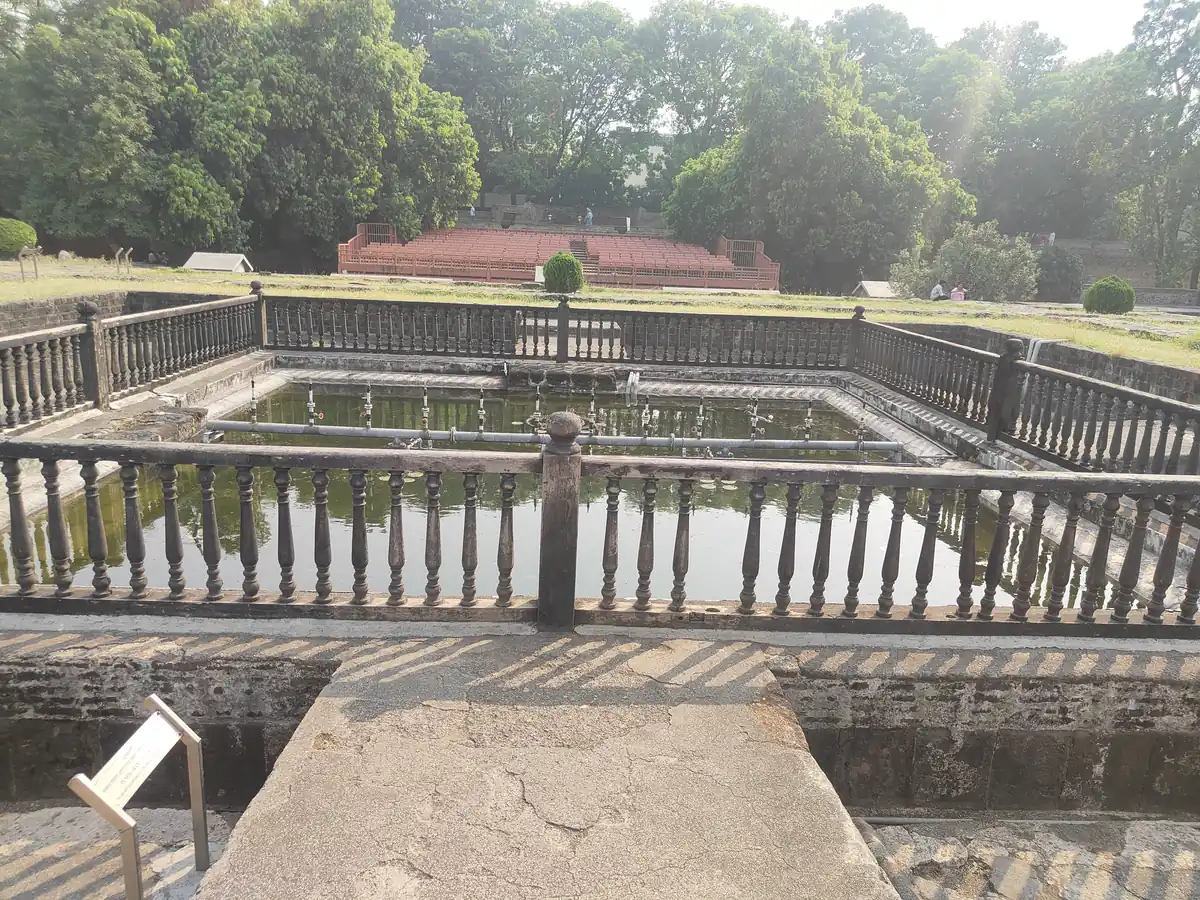
**The water system.** A large reservoir supplied the palace's 1,000 residents, and there are stone tanks and a deep well. It's one of the best ways to understand how big the household was.
One of the stone tanks inside the Wada.
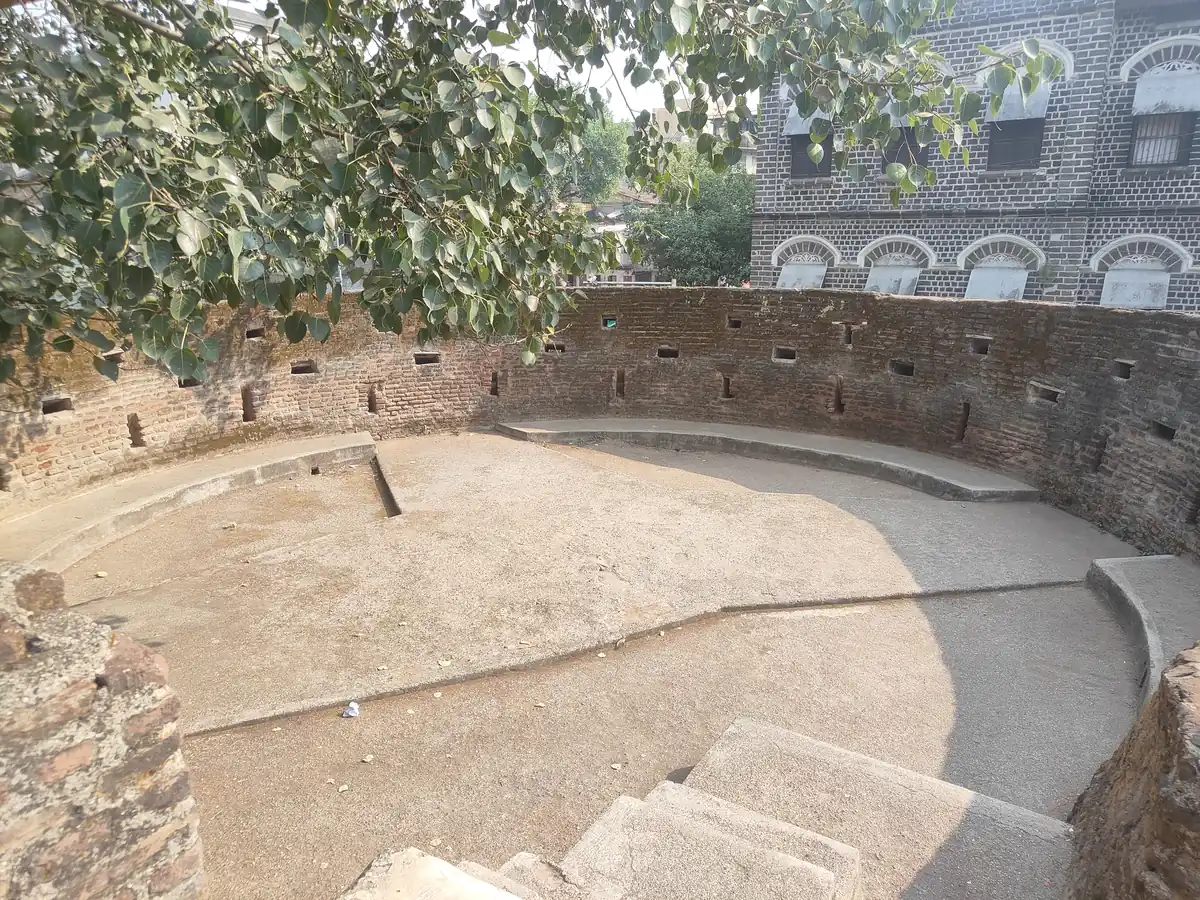
**The round stone enclosure** by the wall, with steps leading down into it. It has no information board, but it is worth a look on your way round.
The round stone enclosure by the wall.
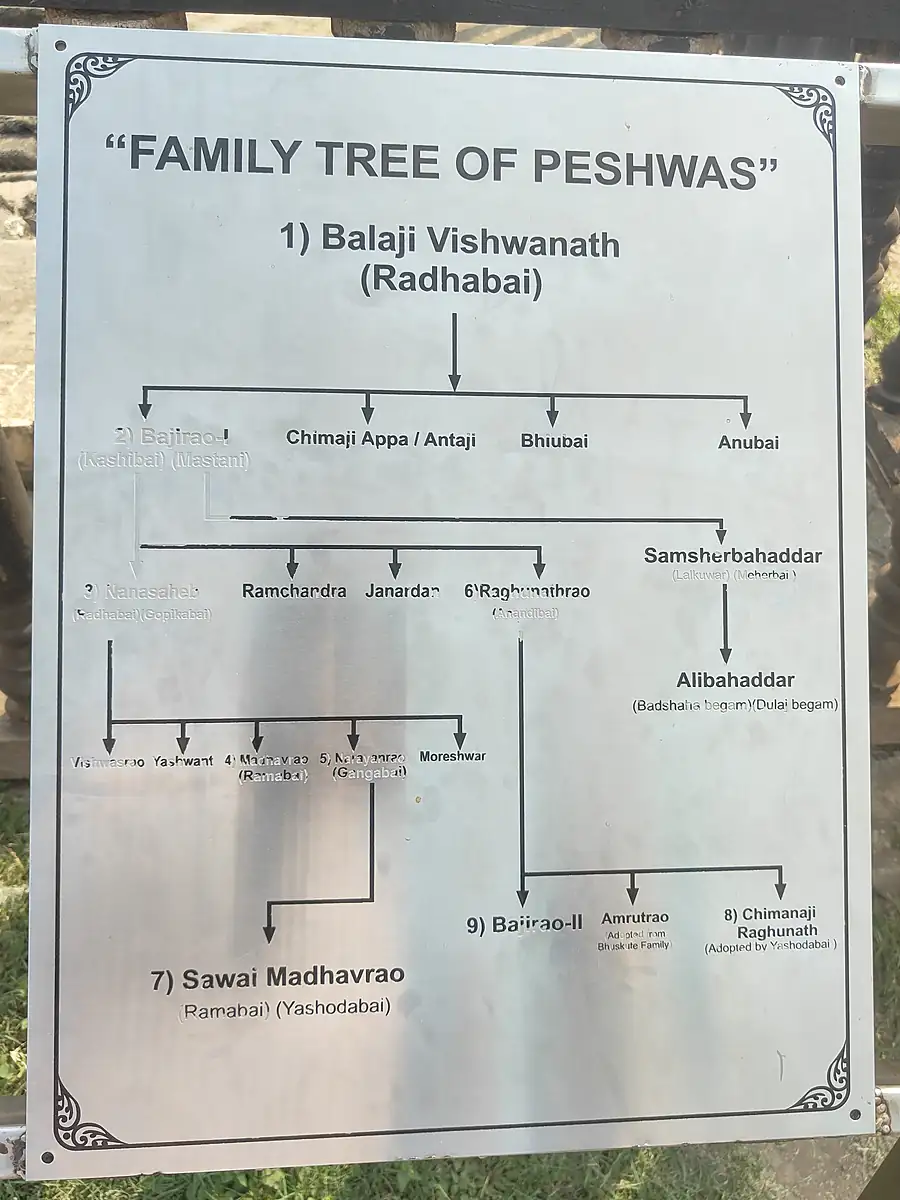
**The Peshwa family tree board.** It lists all nine Peshwas in order, from Balaji Vishwanath to Bajirao II, with their wives and brothers. It's useful because the names repeat: there are two Bajiraos, and Madhavrao and Sawai Madhavrao are different people. There are boards in both Marathi and English. Some names on the English steel board have faded, so stand at an angle to read them.
The family tree of the Peshwas, numbered 1 to 9 in order of rule.
## My tips
- **Set up UPI before you leave.** No counter, no cash. Foreigners: book online in advance.
- **Go in the morning between October and February.** It's an open-air site, so midday in summer is hard work.
- **Don't film.** Videos and reels are banned by ASI. Normal photos are fine.
- **Watch children near the well and tanks.** Keep them away from the edges.
- **Pair it with a walk.** Lal Mahal is right opposite, and Kasba Ganpati and Dagdusheth Halwai Ganpati are within a kilometre or two. Together they make an easy half-day in the old city.
- **Don't plan around the light and sound show** until you've confirmed it's running that day.
## Places nearby
- **Lal Mahal:** directly opposite the Delhi Darwaja, a rebuilt version of the house where Chhatrapati Shivaji Maharaj spent his early years.
- **Kasba Ganpati** and **Dagdusheth Halwai Ganpati:** Pune's best-known Ganpati temples, a short walk away.
- **Vishrambaug Wada** and the **Kelkar Museum:** for more Peshwa-era Pune.
- **[Sinhagad Fort](https://trekmaharashtra.com/sinhagad-fort/):** the nearest proper fort climb from Pune. For more, see [forts near Pune](https://trekmaharashtra.com/forts-near-pune/).
## Questions people ask
### What is the Shaniwar Wada ticket price?
₹20 for Indian citizens and ₹250 for foreigners. Children under 15 don't need a ticket. Checked on the ASI board at the gate on 18 Nov 2026.
### Can I buy a Shaniwar Wada ticket at the gate?
Not with cash. There is no ticket counter. You scan the QR code at the entrance and pay by UPI, or book at asi.paygov.org.in. Without a smartphone, the board lists UPI 123Pay on 7022459111 with monument code 120.
### What are Shaniwar Wada's timings?
9:00 AM to 5:30 PM, every day. There is no weekly closed day.
### How much time do I need at Shaniwar Wada?
About 1.5 to 2 hours if you walk the rampart, see all five gates and read the boards. An hour is enough for a quick look.
### Is the Shaniwar Wada light and sound show running?
It wasn't mentioned on the entrance board when we visited on 18 Nov 2026. Check on the day before planning an evening around it.
### Can I shoot videos or reels at Shaniwar Wada?
No. The ASI board bans videography, reels, short videos and professional photoshoots. Ordinary photos on your phone are fine.
### Who built Shaniwar Wada and when?
Peshwa Bajirao I. The foundation was laid on Saturday, 10 January 1730, and the housewarming was on 22 January 1732. A fire in February 1827 (the ASI board's date; most other sources say 1828) destroyed the palace.
### Is Shaniwar Wada good for kids?
Yes. Children under 15 get in free and the gardens are open and flat. Hold their hands near the deep stone well and the open tanks.