The Nashik Kumbh Mela, officially the Nashik–Trimbakeshwar Simhastha Kumbh Mela, runs from 31 October 2026 to 24 July 2028 on the Godavari river in Maharashtra. It is held at two places about 30 km apart: Ramkund in Nashik and Kushavarta in Trimbakeshwar. The three main bathing days, the Amrit Snan, are 2 August, 31 August and 11–12 September 2027. It comes once every 12 years, and the last one was in 2015.
Nashik Kumbh Mela 2026–28 dates
| Date | Event | Where |
|---|---|---|
| 31 October 2026 | Dhwajarohan: flag hoisting, the opening of the Kumbh | Ramkund, Nashik and Trimbakeshwar |
| 29 July 2027 | Nagar Pradakshina: procession around Nashik | Nashik |
| 2 August 2027 | First Amrit Snan | Nashik and Trimbakeshwar |
| 31 August 2027 | Second Amrit Snan | Nashik and Trimbakeshwar |
| 11 September 2027 | Third Amrit Snan | Ramkund, Nashik |
| 12 September 2027 | Third Amrit Snan | Kushavarta, Trimbakeshwar |
| 24 July 2028 | Flag lowered; the Kumbh ends | Nashik and Trimbakeshwar |
These dates were announced by the Maharashtra government with the akharas in June 2025. The Kumbh Mela authority will also announce other auspicious bathing days (parvani snan) through 2027 and 2028. We will add them here as they are confirmed.
Amrit Snan (Shahi Snan) dates 2027
The Amrit Snan is the royal bath, the most important moment of any Kumbh. It was earlier called the Shahi Snan. On these days the akharas, the orders of sadhus, walk in procession to the river and bathe first, in a fixed order. Ordinary pilgrims bathe after them.
- 2 August 2027: first Amrit Snan
- 31 August 2027: second Amrit Snan
- 11 September 2027: third Amrit Snan at Ramkund, Nashik
- 12 September 2027: third Amrit Snan at Kushavarta, Trimbakeshwar
These are the most crowded days of the whole Kumbh. Roads close, vehicles are stopped far from the ghats and you may walk several kilometres. If you want to see the akhara processions, go on these days. If you want a calmer holy dip, pick another day in the season.
Two Kumbh sites: Nashik and Trimbakeshwar
Nashik is the only Kumbh held at two places at once.
Ramkund, Nashik. A bathing tank on the Godavari in the old Panchavati area of Nashik city. This is where the Vaishnav akharas bathe. Panchavati is linked with the Ramayana, and Kalaram temple and Sita Gufa are a short walk away.
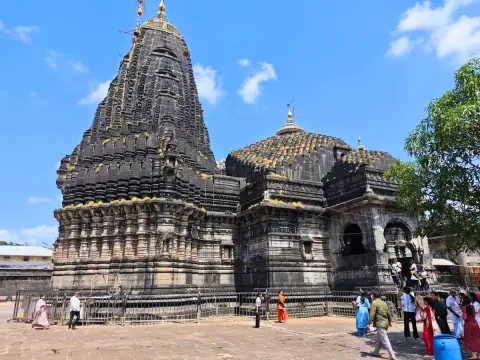
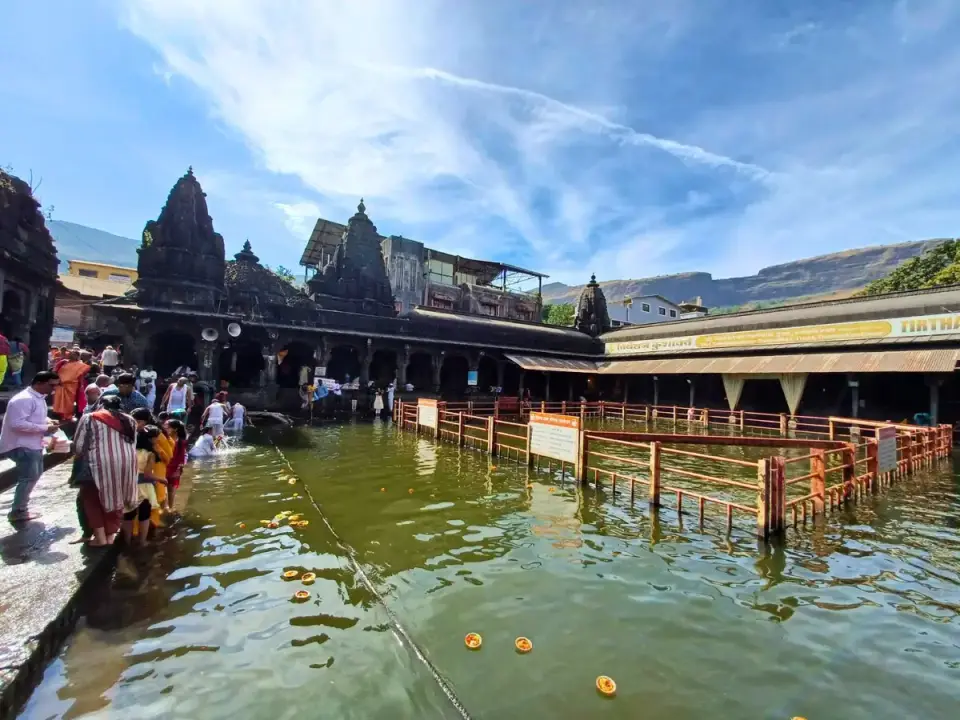
Kushavarta, Trimbakeshwar. A sacred tank in Trimbak town, about 30 km from Nashik, near the source of the Godavari. This is where the Shaiva akharas, including the Naga sadhus, bathe. The Trimbakeshwar Jyotirlinga temple is a few minutes’ walk away.
Until 1789 the Simhastha was held only at Trimbak. That year, a violent clash between Shaiva and Vaishnav sadhus over who would bathe first led the Peshwa government to give the Vaishnavs a separate site at Nashik. The two-site arrangement has continued since.
What is the Simhastha Kumbh Mela?
The Kumbh Mela is the world’s largest gathering of pilgrims, held in turn at four places on sacred rivers:
- Prayagraj, at the meeting of the Ganga, Yamuna and Saraswati
- Haridwar, on the Ganga
- Nashik–Trimbakeshwar, on the Godavari
- Ujjain, on the Shipra
Each place hosts it about once every 12 years, so a Kumbh comes round somewhere in India roughly every three years. The timing follows the positions of Jupiter, the Sun and the Moon. Nashik’s Kumbh is called Simhastha because it is held when Jupiter is in Simha (Leo).
The story behind it is the samudra manthan, the churning of the ocean, in which gods and demons fought over a pot (kumbh) of amrit, the nectar of immortality. Tradition says drops of amrit fell at these four places, which is why bathing there during the Kumbh is believed to wash away sins.
UNESCO added the Kumbh Mela to its list of the Intangible Cultural Heritage of Humanity in 2017.
Kumbh Mela 2026, 2027 and 2028: where and when
People often search for “Kumbh Mela 2026” without knowing where it is. Here is what is happening across India:
| When | Mela | Where |
|---|---|---|
| January–February 2026 | Magh Mela (held every year) | Prayagraj, Uttar Pradesh |
| January–February 2026 | Mahamagham, called the Kerala Kumbh Mela | Thirunavaya, Kerala |
| 31 October 2026 to 24 July 2028 | Simhastha Kumbh Mela | Nashik and Trimbakeshwar, Maharashtra |
| January to April 2027 | Ardh Kumbh Mela | Haridwar, Uttarakhand |
| 15 January to 6 March 2027 | Mahamagham (Kerala Kumbh Mela) | Thirunavaya, Kerala |
| 2028 | Simhastha Kumbh Mela | Ujjain, Madhya Pradesh |
The last Maha Kumbh was at Prayagraj from 13 January to 26 February 2025, and it drew an estimated 660 million people. At Prayagraj, the next Ardh Kumbh is expected in 2031 and the next full Kumbh in 2037.
How to reach Nashik for the Kumbh
By train: Nashik Road station is on the main Mumbai–Delhi and Mumbai–Kolkata lines, with direct trains from most big cities. Indian Railways usually adds special trains for the Amrit Snan days. From the station, Ramkund is about 10 km and Trimbakeshwar about 30 km.
By road: Nashik is about 170 km from Mumbai (4 hours on the Mumbai–Agra highway) and about 210 km from Pune (5 hours). MSRTC runs buses from both cities and across Maharashtra.
By air: Nashik’s Ozar airport has a small number of domestic flights. Mumbai airport, about 170 km away, has far more choice.
Parking and traffic: on big bathing days private vehicles will not be allowed near the ghats. The authority has proposed temporary parking along the main roads into the city, including the Mumbai, Pune, Peth, Dindori, Dhule, Gangapur and Jawhar roads, with shuttles to the ghats. A new 66 km ring road around Nashik is also being built for the Kumbh. Check the final parking plan on the official website before you drive.
Where to stay during the Kumbh
Rooms in Nashik and Trimbak fill up months before the Amrit Snan days, and prices rise sharply. Book as early as you can.
- Nashik city hotels: the widest choice, from budget lodges to business hotels.
- Panchavati dharamshalas: simple, cheap rooms run by community trusts, close to Ramkund.
- Trimbakeshwar: the temple trust’s Bhakta Niwas, plus lodges and dharamshalas near Kushavarta.
- Tent cities: the government has invited private landowners to set up tent camps for visitors. Locations and prices are still to be announced.
- Igatpuri, Ghoti and nearby towns: an option if Nashik is full, though you will spend more time on the road.
Planning tips and safety
- Choose your day. For akhara processions, go on an Amrit Snan day and expect very long walks. For a peaceful dip, choose a normal day in the season, or come earlier, between November 2026 and June 2027.
- It is the monsoon. The Amrit Snan days fall in August and September, Nashik’s rainy season. Carry a raincoat and quick-drying clothes, and expect a fast-flowing Godavari.
- Set a meeting point. Phone networks jam in big crowds. Agree a fixed landmark with your group, and put a note with your name and phone number in children’s and elderly people’s pockets.
- Follow police barricades and one-way routes. In 2003, a stampede near Ramkund killed 39 people. Do not push against the crowd or stop on narrow approach lanes.
- Travel light. Carry cash, an ID, a water bottle and a small bag. Leave valuables at your hotel.
- Use official information. For dates, routes and rules, rely on the Kumbh Mela authority and the Nashik district administration rather than WhatsApp forwards.
What to see at the Nashik Kumbh
- Akhara processions on Amrit Snan days: sadhus on foot and on decorated chariots, with the Naga sadhus at Trimbakeshwar.
- Sadhugram: the camp where the akharas and sadhus stay through the Kumbh, set up on the edge of Nashik.
- Trimbakeshwar temple: one of the 12 Jyotirlingas. Expect very long queues in the peak season.
- Panchavati: Ramkund, Kalaram temple and Sita Gufa, all walkable from each other.
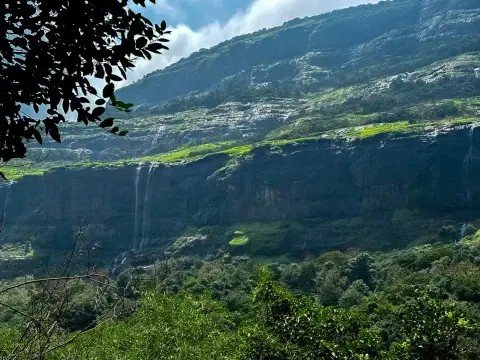
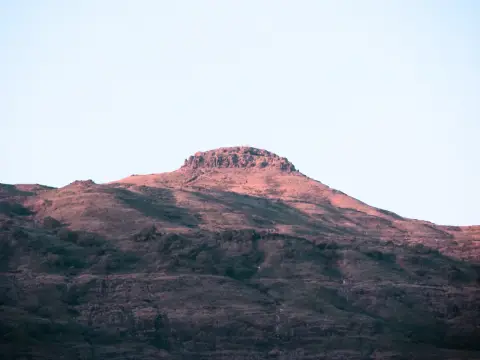
- Brahmagiri hill: the source of the Godavari, above Trimbakeshwar, for those who want a climb.
Nashik Kumbh: past and present
The 2015 Simhastha at Nashik and Trimbakeshwar drew close to 30 million pilgrims over its main season. For 2026–28 the state expects around 2 crore (20 million) visitors to Nashik, and the Nashik–Trimbakeshwar Kumbh Mela Authority is coordinating roads, ghats, Sadhugram, parking and water supply across both towns.
Official information
- Nashik–Trimbakeshwar Kumbh Mela Authority (NTKMA): the government body running the Kumbh. Its official website is due to launch at the flag hoisting on 31 October 2026.
- Divisional Commissioner, Nashik (divcomnashik.maharashtra.gov.in): official notices on parking and administration.
This guide is updated as official announcements come in. The date at the top of the page shows when we last checked.